
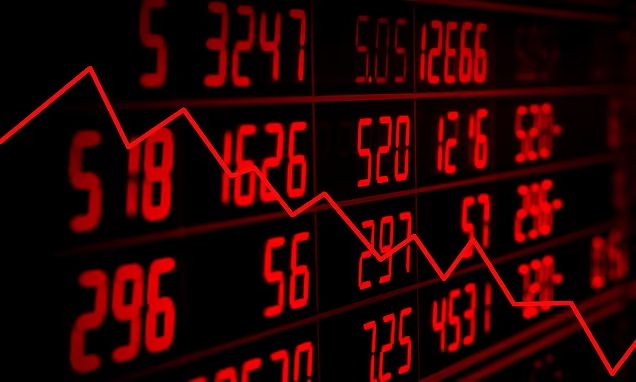

When markets unravel and investors rush for the door, fund managers hold a little-known tool that can stop the crowd in its tracks — and sometimes, protect everyone’s fortune in the process.
Key takeaways
- A gating fund imposes withdrawal restrictions during designated redemption periods to shield the fund from destabilizing outflows.
- Gates are most critical when underlying assets are illiquid and rapid selling would destroy value.
- Managers must notify investors in writing before or upon invoking a gate provision.
- Institutional investors often negotiate side-letter agreements exempting them from gate provisions.
- Michael Burry’s famous housing-crisis bet, depicted in “The Big Short,” turned a deeply unpopular gate decision into enormous investor gains.
Every hedge fund prospectus contains a provision that most investors skim past — a quiet clause buried among pages of legal language that reserves the manager’s right to lock the exits. It goes by several names: a gate clause, a redemption gate, or simply “the gate.” But its purpose is singular: to prevent a rush of withdrawals from forcing a fund into a destructive fire sale at the worst possible moment.
What a gating fund actually is
A gating fund is any investment fund — almost always a hedge fund — whose governing documents include a provision allowing the manager to limit or entirely suspend investor redemptions during a specified period. This provision doesn’t activate automatically. It is a discretionary tool that fund managers can invoke when they judge that unchecked withdrawals would cause serious harm to the fund’s portfolio, its strategy, or the investors who remain.
The mechanics are straightforward. Hedge funds typically allow redemptions on a quarterly or monthly schedule. Under a gate provision, the manager may cap the total amount that can be redeemed in any single period — commonly set at ten to twenty-five percent of the fund’s net asset value. Investors who have submitted redemption requests above that threshold may find their capital partially returned, with the remainder queued for future periods.
“A gate provision is not a betrayal of investors — it is, at its best, the manager’s refusal to let a panicking few destroy the returns of the patient many.”
Why gates exist: the logic of illiquidity
To understand why gates exist, consider what hedge funds actually hold. Unlike a mutual fund that might own only publicly traded stocks sellable within seconds, a hedge fund’s portfolio often includes positions in private credit, distressed debt, real estate, commodity derivatives, or complex structured products. These instruments cannot be sold overnight — and if the fund is forced to dump them at once, it does so at ruinous prices.
This is the core problem a gate provision solves. When investors become nervous — during a market crisis, a stretch of underperformance, or even simple rumour. However, they may all submit redemption notices simultaneously. If the fund honours each request at full value, it must liquidate holdings into a market that senses the distress and prices accordingly. The result is a classic bank-run dynamic: the first investors to leave get their money; those who wait are left with a depleted, degraded fund. A gate forces everyone to wait together, protecting the collective value of the portfolio.
The legal and relational weight of invoking a gate
Invoking a gate is never done casually. Most fund managers consult legal counsel before making the call, and they are required to notify investors in writing — explaining the rationale, the duration, and what partial distributions, if any, will be made in the interim. The notification is both a legal obligation and a reputational moment. Investors who receive it often feel trapped, and no matter how sound the underlying logic, the announcement tends to generate suspicion, anger, and sometimes litigation.
This reputational cost is one reason managers lean on gate provisions sparingly. Hedge funds compete aggressively for investor capital. And also, a fund known for locking up withdrawals can find it difficult to raise money in subsequent years — even if the gate ultimately worked exactly as intended.
Not everyone is behind the same gate
One of the less-discussed complexities of gate provisions is that they rarely apply equally to all investors. Institutional allocators — pension funds, endowments, sovereign wealth gating fund— often negotiate “side letters” when they commit capital to a hedge fund. These private agreements may include carve-outs that exempt the institution from gate provisions. Or that guarantee shorter lock-up periods.
The practical consequence is that a gate can simultaneously trap retail and smaller investors while leaving large institutions free to exit. Some critics argue this inequity undermines the stated rationale of protecting all investors equally. Indeed, a number of hedge funds have quietly removed gate provisions from their documents after concluding that, with so many institutional exemptions in place. However, the gate doesn’t actually cover the majority of the fund’s capital — rendering it nearly symbolic.
Michael Burry and the gate that made history
No discussion of gate provisions is complete without the story of Michael Burry and Scion Capital. In the years before the 2008 financial crisis, Burry had constructed an elaborate short position against the U.S. housing market — buying credit default swaps on mortgage-backed securities he believed were catastrophically mispriced. The position was costly to carry, generating losses on paper as the housing market stubbornly remained aloft.
His investors, watching premiums drain from the fund while the trade refused to pay off, grew furious. Redemption requests mounted. Faced with the prospect of being forced to unwind his positions prematurely. Just before, he was convinced, they would deliver extraordinary returns. Burry invoked a gate provision, halting redemptions entirely.
The decision was, by all accounts, received with outrage. Investors threatened legal action. The atmosphere within Scion was described as poisonous. But Burry held the gate closed. When the housing market finally collapsed and the credit default swaps paid out. However, the gating fund generated returns exceeding 400 percent for the year. The gate that investors had condemned as a betrayal became, in retrospect. Also, the mechanism that preserved one of the most profitable trades in hedge fund history. The episode was dramatised in the 2015 film “The Big Short,”. In which Burry is portrayed invoking the gate against a backdrop of investor fury and his own lonely conviction.
When gates go wrong
Burry’s outcome was exceptional. More commonly, gate provisions are invoked not to protect a brilliant strategy but to manage a fund’s slow-motion distress. During the 2008 crisis, dozens of hedge funds — particularly those holding illiquid structured credit — froze redemptions simultaneously. Many of those funds never recovered, eventually winding down while investors waited years to retrieve their capital. In these cases, the gate delayed, rather than prevented, significant losses.
The difference between the two outcomes hinges on the underlying portfolio. A gate protects valuable assets from forced sale. It cannot transform failing assets into sound ones. A manager who invokes a gate to buy time for a genuinely strong strategy serves investors well. One who invokes it to avoid confronting portfolio losses merely defers the reckoning.
What investors should know before committing capital
For any investor considering a hedge fund allocation, the gate provision deserves careful attention during due diligence. Key questions include: Under what conditions can the gate be invoked? What percentage of assets can be redeemed in a gated period? Are there investor categories exempt from the gate? And critically, how liquid are the underlying assets relative to the redemption terms offered?
A </span>gating fund offering quarterly redemptions while holding assets that take years to sell is a structural mismatch that a gate provision alone cannot fully resolve. Investors who understand this tension before committing capital are far better positioned to evaluate whether a gate. If it comes — is a sign of strength or a signal of trouble.

Mình đã trải nghiệm khá nhiều nền tảng cá cược nhưng thấy F8BET có giao diện dễ dùng và tốc độ tải nhanh hơn hẳn. Đặc biệt lúc xem bóng đá trực tiếp rất mượt, không bị giật lag như vài nơi khác.
C168 là nhà cái trực tuyến đang thu hút đông đảo người chơi nhờ nền tảng giải trí hiện đại, giao diện thân thiện và hệ thống vận hành ổn định. Với đa dạng sản phẩm như cá cược thể thao, casino trực tuyến, slot game và nhiều trò chơi hấp dẫn, C168 mang đến trải nghiệm giải trí chuyên nghiệp và tiện lợi cho mọi thành viên.
C168 là nhà cái trực tuyến đang thu hút đông đảo người chơi nhờ nền tảng giải trí hiện đại, giao diện thân thiện và hệ thống vận hành ổn định. Với đa dạng sản phẩm như cá cược thể thao, casino trực tuyến, slot game và nhiều trò chơi hấp dẫn, C168 mang đến trải nghiệm giải trí chuyên nghiệp và tiện lợi cho mọi thành viên.
Mình chơi thử ở F8BET được một thời gian và thấy giao diện khá dễ dùng, đặc biệt là phần cá cược thể thao cập nhật kèo nhanh. Tốc độ tải trang ổn định nên trải nghiệm không bị gián đoạn khi vào trận lớn.
78win có tỷ lệ kèo bóng đá khá cạnh tranh so với nhiều nhà cái khác mà mình từng thử. Cuối tuần xem bóng vừa giải trí vừa đặt cược nhẹ khá cuốn, nhất là các giải lớn châu Âu.
C168 Khuyến Mãi Nạp Tiền: Cơ Hội Vàng Không Thể Bỏ Lỡ Cho Người Chơi
C168 Quay Thưởng May Mắn: Cơ Hội Đổi Đời Đang Chờ Đón Bạn
C168 là nhà cái trực tuyến đang thu hút sự chú ý của đông đảo người chơi nhờ giao diện hiện đại và hệ sinh thái giải trí đa dạng. Nền tảng này mang đến nhiều sản phẩm hấp dẫn như cá cược thể thao, casino trực tuyến, slot game
C168: Thiên Đường Cược Thể Thao VIP – Trải Nghiệm Đỉnh Cao Cho Người Chơi Sành Điệu
Không chỉ nổi bật với kho game phong phú, C168 còn ghi điểm nhờ tốc độ nạp rút nhanh chóng, bảo mật an toàn và dịch vụ chăm sóc khách hàng hoạt động 24/7. Đây là một trong những sân chơi trực tuyến được nhiều người lựa chọn khi muốn trải nghiệm cá cược trong môi trường minh bạch và tiện nghi.
C168 là nhà cái trực tuyến đang thu hút đông đảo người chơi nhờ nền tảng giải trí hiện đại, giao diện thân thiện và hệ thống vận hành ổn định. Với đa dạng sản phẩm như cá cược thể thao, casino trực tuyến, slot game và nhiều trò chơi hấp dẫn, C168 mang đến trải nghiệm giải trí chuyên nghiệp và tiện lợi cho mọi thành viên.
Nếu anh em tìm nhà cái minh bạch thì nên thử C168, hiện tại họ đang tặng 68K trải nghiệm miễn phí cho tân thủ. Nền tảng này có hướng dẫn luật chơi rất kỹ, nhưng mọi người nhớ chỉ nên chơi giải trí và kiểm soát vốn thật tốt nhé.
Nếu anh em tìm nhà cái minh bạch thì nên thử C168.COM, hiện tại họ đang tặng 68K trải nghiệm miễn phí cho tân thủ. Nền tảng này có hướng dẫn luật chơi rất kỹ, nhưng mọi người nhớ chỉ nên chơi giải trí và kiểm soát vốn thật tốt nhé.
C168 Khuyến Mãi Đặc Biệt: Cơ Hội Vàng Không Thể Bỏ Lỡ Cho Game Thủ Việt
Nạp rút qua USDT tại c168 com là phương thức mình ưng nhất vì tính bảo mật cao và còn được tặng thêm 0.6% không giới hạn mỗi lần giao dịch. Hệ thống vận hành minh bạch, ổn định nhưng mọi người cũng cần lưu ý rủi ro tài chính và biết điểm dừng đúng lúc khi cá cược.
Mình đánh giá cao tốc độ tải trang của F8BET, dùng trên điện thoại vẫn chạy ổn định. Đăng nhập và đặt cược không bị lag nhiều như vài bên khác.
Tại C168 có đầy đủ các sảnh cược từ Ba cào đến bóng đá với tỷ lệ hoàn trả khá hấp dẫn so với mặt bằng chung. Việc truy cập đúng link chính thống của nhà cái uy tín C1688 giúp mình yên tâm hơn về vấn đề bảo mật dữ liệu và được hỗ trợ sòng phẳng khi rút thưởng. Một lời khuyên cho anh em là cá cược mang tính may rủi rất cao, vì vậy hãy coi đây là hình thức giải trí đơn thuần và tuyệt đối không nên sa đà quá mức.
Mình mới đăng ký tài khoản tại C168 và nhận được code 68K trải nghiệm khá nhanh, giao diện trên điện thoại chạy rất mượt. Theo cảm nhận của mình, đây là nền tảng minh bạch với dịch vụ hỗ trợ khách hàng tận tâm, xứng đáng là một nhà cái uy tín để anh em tham khảo. Tuy nhiên, mọi người cũng cần lưu ý cá cược luôn tiềm ẩn rủi ro tài chính, nên hãy chơi có trách nhiệm và chỉ dùng khoản tiền nhàn rỗi thôi nhé.
Cảm ơn tác giả vì đã chia sẻ thông tin một cách có hệ thống. Bài viết giúp người đọc có cái nhìn tổng quan hơn về chủ đề này.
Website được tối ưu tốt cho thiết bị di động, quá trình chuyển đổi giữa các trang diễn ra nhanh chóng.
Điểm đáng chú ý của F8BET là giao diện thân thiện với người mới, không mất quá nhiều thời gian để làm quen.
C168 Rút Tiền Siêu Tốc: Trải Nghiệm Giao Dịch Tài Chính Minh Bạch và Nhanh Chóng
F8bet nơi quy tụ những game show nổi bật nhất năm 2026
F8bet nơi quy tụ những game show nổi bật nhất năm 2026
F8bet nơi quy tụ những game show nổi bật nhất năm 2026
F8bet nơi quy tụ những game show nổi bật nhất năm 2026
C168 là nền tảng giải trí trực tuyến đang nhận được nhiều sự quan tâm từ cộng đồng người chơi nhờ hệ thống vận hành ổn định, giao diện hiện đại và đa dạng sản phẩm giải trí. Với định hướng phát triển chuyên nghiệp, C168 không ngừng nâng cấp chất lượng dịch vụ để mang đến trải nghiệm tốt nhất cho người dùng.
F8bet nơi quy tụ những game show nổi bật nhất năm 2026
F8bet nơi quy tụ những game show nổi bật nhất năm 2026
Điểm nổi bật của C168 nằm ở kho trò chơi phong phú, từ cá cược thể thao, casino trực tuyến đến các tựa game đổi thưởng hấp dẫn. Bên cạnh đó, hệ thống giao dịch nạp rút nhanh chóng cùng dịch vụ hỗ trợ khách hàng 24/7 giúp người chơi an tâm trong suốt quá trình trải nghiệm.
F8bet nơi quy tụ những game show nổi bật nhất năm 2026
F8bet nơi quy tụ những game show nổi bật nhất năm 2026
78win nơi quy tụ những game show nổi bật nhất năm 2026
F8BET nơi quy tụ những game show nổi bật nhất năm 2026
QQ88 là nền tảng giải trí trực tuyến uy tín với kho game đa dạng, giao diện hiện đại, giao dịch nhanh chóng và nhiều ưu đãi hấp dẫn năm 2026.
C168 là nhà cái trực tuyến đang nhận được nhiều sự quan tâm từ cộng đồng người chơi nhờ nền tảng vận hành ổn định, giao diện hiện đại. Tại đây, người dùng có thể trải nghiệm cá cược thể thao, casino trực tuyến, game slot cùng nhiều sản phẩm hấp dẫn khác trên cùng một nền tảng.
78win nơi quy tụ những game show nổi bật nhất năm 2026
Điểm nổi bật của C168 nằm ở tốc độ nạp rút nhanh chóng, công nghệ bảo mật tiên tiến và đội ngũ chăm sóc khách hàng hoạt động 24/7. Bên cạnh đó, nhà cái thường xuyên triển khai các chương trình khuyến mãi hấp dẫn nhằm mang đến nhiều giá trị hơn cho người chơi.
F8BET nơi quy tụ những game show nổi bật nhất năm 2026
Mình đánh giá cao giao diện của F8BET vì được thiết kế trực quan, phù hợp cho cả người mới lẫn người đã có kinh nghiệm.
Điều mình ấn tượng ở F8BET là giao diện hiện đại và thân thiện với người dùng. Người mới cũng có thể dễ dàng làm quen chỉ sau vài phút sử dụng.
C168 là nền tảng giải trí trực tuyến đang nhận được sự quan tâm của đông đảo người chơi nhờ hệ thống trò chơi đa dạng và giao diện hiện đại. Tại đây, thành viên có thể trải nghiệm nhiều sản phẩm hấp dẫn như thể thao, casino trực tuyến, nổ hũ, bắn cá và xổ số
QQ88 mang đến nguồn tin đa chiều với nhiều chuyên mục hấp dẫn, từ các sự kiện nổi bật trong nước đến xu hướng quốc tế. Với tiêu chí nhanh, chính xác và hữu ích, QQ88 là điểm đến quen thuộc của những người yêu thích cập nhật tin tức mỗi ngày.
C168 ghi điểm với mình nhờ giao diện hiện đại và các quy trình vận hành được niêm yết công khai cực kỳ minh bạch ngay tại trang chủ. Hệ thống này giúp người dùng dễ dàng nắm bắt thông tin và tham gia giải trí một cách an tâm hơn nhờ lộ trình rõ ràng. Tuy nhiên, anh em nhớ tham gia có trách nhiệm và luôn biết điểm dừng để bảo vệ nguồn vốn cá nhân nhé.
C168 ứng dụng công nghệ mã hóa dữ liệu hiện đại, đảm bảo an toàn tối đa cho thông tin hội viên khi thực hiện các giao dịch tại nhà cái C168. Việc đầu tư mạnh mẽ vào hạ tầng kỹ thuật và tốc độ truy cập cho thấy cam kết của thương hiệu trong việc kiến tạo một môi trường giải trí ổn định. Cảnh báo: Cá cược trực tuyến mang tính may rủi cao, bạn hãy luôn chủ động quản lý nguồn vốn và tham gia tỉnh táo
Mình đánh giá cao trải nghiệm trên F8BET vì tốc độ truy cập ổn định và giao diện thân thiện. Cảm ơn bài viết đã cung cấp thêm nhiều thông tin.
Bên cạnh đó, C168 còn thường xuyên triển khai nhiều chương trình khuyến mãi giá trị, mang đến cơ hội nhận thưởng hấp dẫn cho thành viên.
C168 (C168.com) ghi điểm với mình nhờ giao diện hiện đại và các quy trình vận hành được niêm yết công khai cực kỳ minh bạch ngay tại trang chủ. Hệ thống này giúp người dùng dễ dàng nắm bắt thông tin và tham gia giải trí một cách an tâm hơn nhờ lộ trình rõ ràng. Tuy nhiên, anh em nhớ tham gia có trách nhiệm và luôn biết điểm dừng để bảo vệ nguồn vốn cá nhân nhé.
Bài viết cung cấp thông tin rất chi tiết. Ai đang tìm hiểu về F8BET có thể tham khảo để có cái nhìn tổng quan hơn.
Vừa hoàn tất đăng ký tại C168 là mình nhận ngay được code 68K khởi nghiệp, hỗ trợ khách hàng ở đây trực 24/7 nên giải đáp thắc mắc rất nhanh. Giao diện trang chủ mượt mà, dễ thao tác, cực kỳ phù hợp cho những anh em mới bắt đầu tìm kiếm cơ hội bứt phá thu nhập.
Mình thấy đây là một bài chia sẻ hữu ích, đặc biệt với những người mới tìm hiểu về lĩnh vực này.
Hệ thống link vào C168 luôn ổn định và không bị chặn, giúp trải nghiệm soi kèo bóng đá hay chơi casino của mình không bao giờ bị gián đoạn. Điểm cộng lớn nhất là nền tảng bảo mật thông tin cực tốt, giúp mình hoàn toàn yên tâm tận hưởng kho game đồ sộ mà không lo ngại rủi ro rò rỉ dữ liệu cá nhân.
C168 không ngừng nâng cấp chất lượng dịch vụ và tăng cường bảo mật cho người dùng. Bên cạnh đó, nhà cái còn thường xuyên triển khai các chương trình ưu đãi hấp dẫn, góp phần nâng cao trải nghiệm giải trí cho thành viên.
C168 thường xuyên triển khai các chương trình khuyến mãi hấp dẫn, mang đến nhiều giá trị cho thành viên.
C168 là nhà cái trực tuyến nổi bật với hệ sinh thái giải trí đa dạng, đáp ứng nhu cầu của đông đảo người chơi.
Hệ thống link vào C168 luôn ổn định và không bị chặn, giúp trải nghiệm soi kèo bóng đá hay chơi casino của mình không bao giờ bị gián đoạn. Điểm cộng lớn nhất là nền tảng bảo mật thông tin cực tốt, giúp mình hoàn toàn yên tâm tận hưởng kho game đồ sộ mà không lo ngại rủi ro rò rỉ dữ liệu cá nhân.
C168 không ngừng nâng cấp chất lượng dịch vụ nhằm mang đến trải nghiệm giải trí mượt mà cho người dùng. Hệ thống thanh toán nhanh chóng cùng nhiều chương trình ưu đãi hấp dẫn là những điểm nổi bật của nền tảng này.
Mình mới biết đến F8BET qua bài viết này, thấy giao diện khá trực quan và dễ sử dụng. Cảm ơn tác giả đã chia sẻ thông tin hữu ích.
C168 ghi điểm nhờ giao diện trực quan và quy trình vận hành được niêm yết công khai minh bạch ngay trên trang chủ, giúp người chơi dễ dàng nắm bắt thông tin xác thực. Hệ thống xử lý dữ liệu ổn định mang lại cảm giác an tâm khi trải nghiệm các dịch vụ iGaming chuyên nghiệp. Tuy nhiên, anh em lưu ý cần tìm hiểu kỹ điều khoản và luôn tham gia có trách nhiệm để bảo vệ nguồn vốn cá nhân.
Trước giờ mình cũng từng tìm hiểu khá nhiều nền tảng khác nhau, thấy F8BET có cách bố trí chuyên mục khá rõ ràng nên dễ tìm nội dung cần sử dụng.
C168 là nền tảng giải trí trực tuyến được nhiều người chơi quan tâm nhờ hệ thống cá cược đa dạng và giao diện hiện đại. Tại đây, hội viên có thể tham gia nhiều chuyên mục hấp dẫn như thể thao, casino trực tuyến, slot game, bắn cá và xổ số trên cùng một nền tảng.
Nền tảng c168 thường xuyên triển khai các chương trình ưu đãi dành cho thành viên mới và người chơi lâu năm, góp phần gia tăng trải nghiệm giải trí.
Để đảm bảo an toàn thông tin và tránh các rủi ro từ website giả mạo, người chơi nên ưu tiên truy cập qua hệ thống Link C168 chính thức đã được nhà cái xác thực. Nền tảng này chú trọng kiến tạo môi trường giải trí minh bạch, đồng thời thúc đẩy văn hóa chơi có kiểm soát nhằm hạn chế tối đa các rủi ro tài chính phát sinh ngoài ý muốn. Cảnh báo rủi ro: Cá cược trực tuyến mang tính chất may rủi cao, hãy luôn giữ sự tỉnh táo và biết điểm dừng đúng lúc.
Nội dung ngắn gọn nhưng đầy đủ ý. Đọc xong mình hiểu rõ hơn về F8BET và các tiện ích được giới thiệu.