
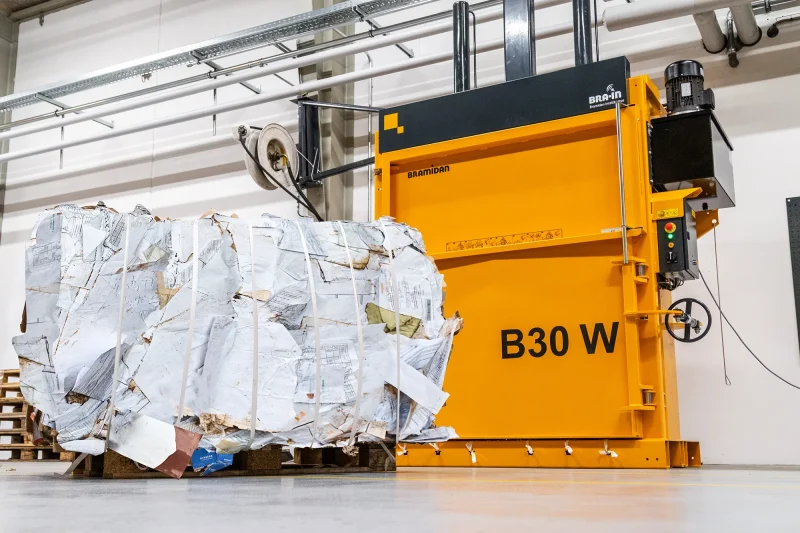

Imagine being able to install a piece of equipment that could save your business thousands of pounds per year in waste management costs — and pay absolutely nothing to try it. That is exactly what a free baler trial offers. Yet many business owners and operations managers have never explored this option, often assuming the process is complicated, the catch is hidden, or the benefit is overstated. This guide will show you why they are wrong on all three counts.
A free baler trial for business can be a game-changer if you’re struggling with waste management costs, as I once did. Testing a baler before committing helped me understand its real impact on efficiency, storage, and savings. It’s a smart, risk-free way to see how your operations can improve without upfront investment. If you’re aiming to streamline waste handling and cut expenses, starting with a free trial could be the perfect first step.
What Is a Free Baler Trial — and Why Does It Exist?
A free baler trial for business is a no-obligation arrangement in which a baler supplier delivers and installs a baling machine at your premises for a defined trial period — typically one to four weeks — completely free of charge. During this window, you use the machine under real operational conditions, with your actual waste volumes and your own staff, to assess whether it suits your needs before committing to any purchase or rental agreement.
The reason suppliers offer this is straightforward: baler machines are a compelling product, but many businesses hesitate to invest without tangible proof of value. A trial eliminates that hesitation. The supplier absorbs a short-term cost in exchange for a much higher likelihood of converting your business into a long-term customer. Done right, a free trial is a win for both parties — you get certainty, they get a committed client.
This model is most common in the UK and European markets but is rapidly expanding in North America and Australia as recycling legislation tightens and landfill costs rise. Wherever your business is located, it is worth asking your local suppliers whether a trial is available.
£500+
Average monthly saving for SMEs after adopting a baler
80%
Reduction in waste collection frequency reported by baler users
4 wks
Typical maximum free trial period offered by leading suppliers
Which Businesses Benefit Most from a Baler Trial?
Almost any business that generates regular volumes of recyclable material — cardboard, plastic film, PET bottles, aluminium cans, paper, or textile waste — stands to benefit from a baler. However, certain sectors see the most immediate and dramatic return on investment, and these are the businesses suppliers most eagerly offer free trials to.
Retail and Supermarkets
Retailers of all sizes deal with enormous volumes of cardboard from incoming stock deliveries. Without a baler, this cardboard is either collected loose at high cost, or staff spend hours breaking it down manually. A baler compresses cardboard into neat, dense bales that take up a fraction of the space and command a rebate income when collected by recycling companies. Even a medium-sized supermarket can generate enough baled cardboard to receive a meaningful monthly payment rather than paying for waste collection.
Warehouses and Distribution Centres
The logistics sector is one of the heaviest producers of cardboard and plastic film waste. A distribution centre processing hundreds of pallets per week will accumulate waste at a rate that quickly overwhelms a standard waste contract. A horizontal baler — which handles higher throughput — can process this material continuously, dramatically reducing skip collections and the associated cost.
Manufacturers and Factories
Production facilities often generate waste streams that are predictable and consistent, making them ideal candidates for baling. Whether it is shrink wrap, polypropylene strapping, aluminium offcuts, or cardboard packaging, a baler tailored to the specific waste type can transform a disposal liability into a recoverable asset.
Hotels, Venues, and Hospitality
The hospitality industry generates mixed recyclable waste across food and beverage packaging, cardboard deliveries, and glass. While glass recycling requires specialist handling, cardboard and plastic balers are highly suited to hotel operations — particularly during high-occupancy periods when waste volumes spike.
“We did not realise how much we were overpaying for waste collections until the trial baler arrived and we saw exactly what we were throwing away every single week.”
— Operations Manager, National Retail Chain
What Happens During a Free Baler Trial?
The process is simpler than most business owners expect. Here is a step-by-step overview of what a typical free baler trial looks like from enquiry to outcome.
1
Initial Enquiry and Waste Assessment
You contact a baler supplier and describe your waste streams, volumes, and site constraints. A good supplier will ask detailed questions — how many cardboard boxes per day, what size, do you have plastic film, what is your floor space? This shapes the recommendation.
2
Site Survey (Optional but Recommended)
Many suppliers will visit your premises before the trial to ensure the right machine is delivered. This saves everyone time and ensures the trial is as accurate as possible. A site survey typically takes under an hour.
3
Machine Delivery and Installation
The baler is delivered and positioned at no cost to you. Installation typically takes a few hours. A supplier technician will run your team through safe operation and basic maintenance during this visit.
4
The Trial Period
Your team uses the machine as part of daily operations. The supplier remains available for support. You track waste volumes baled, time saved, and any issues that arise — this data becomes the basis of your investment decision.
5
End-of-Trial Review
The supplier will follow up to discuss your experience. If the machine has performed well, you negotiate a purchase or rental agreement. If it is not right for your business, the machine is collected at no charge and you walk away with no obligation.
The Real Cost of Not Using a Baler: Understanding What You Are Losing
One of the most powerful outcomes of a free baler trial is that it makes the cost of inaction visible. Before a baler arrives, most businesses have only a vague sense of what their waste is costing them. During and after a trial, the numbers become undeniable.
Consider a mid-sized retailer spending £800 per month on general waste collection. If a significant proportion of that bin weight is cardboard and plastic, a baler could reduce collection frequency by 60–80%, immediately cutting that cost. Add the potential income from selling baled cardboard or plastic to recyclers, and the monthly benefit can comfortably exceed £600.
Beyond direct cost, there are hidden operational costs that balers address. Staff time spent breaking down and managing loose cardboard, the safety hazard of cluttered waste areas, and the compliance risk of overflowing bins all have real costs that most businesses never formally account for. A trial period brings these costs into focus.
💡 Did You Know?
Businesses that bale their cardboard and sell it to a certified recycler not only save on collection costs but may also receive a rebate income of between £30 and £80 per tonne depending on market rates. Over a year, this can add up to a significant secondary revenue stream.
Comparing Your Options: Buy, Rent, or Trial First?
When businesses first look into balers, they are often confronted with a choice between outright purchase, rental, and leasing arrangements. A free trial helps you make this decision with confidence rather than guesswork. Here is how the options compare.
| Option | Upfront Cost | Flexibility | Risk | Best For |
| Free Trial | £0 | Maximum | Zero | All businesses starting out |
| Purchase | £2,000–£30,000+ | Low | High if unsuitable | High volume, long-term certainty |
| Rental / Lease | Low monthly cost | Medium | Low–Medium | Steady volumes, budget certainty |
| Managed Service | Minimal | High | Very low | Businesses wanting full outsourcing |
The verdict is clear: unless you already have certainty about your volumes and machine requirements, a free trial should always be your first step. There is no logical reason to bypass it.
How to Maximise Your Free Baler Trial
Getting the most from your trial requires a little preparation. The businesses that convert trial machines into long-term solutions are the ones that approach the trial with intention rather than passivity.
- Designate a trial champion. Assign one member of staff to oversee baler use during the trial, track volumes, and report on the experience. This person becomes your internal advocate or critic — either way, their feedback is invaluable.
- Record your baseline data first. Before the baler arrives, note your current waste collection costs, collection frequency, and the staff time spent managing waste. Without a baseline, you cannot measure improvement.
- Use it daily and realistically. A baler sat idle in a corner does not tell you much. Commit to using it as you would a permanent installation. The trial should reflect your actual operational reality.
- Test with your full range of waste materials. If you generate both cardboard and plastic film, ask the supplier whether the trial machine can handle both. If not, request the right machine — or a second trial of the appropriate type.
- Involve the team who will use it long-term. The people operating the machine every day will have practical insights that management will miss. Their comfort, safety, and enthusiasm with the machine matters enormously.
- Ask every question you have. The trial period is the best time to probe the supplier on after-sales service, maintenance contracts, bale collection logistics, and what happens if the machine breaks down. A reputable supplier welcomes these questions.
Common Myths About Free Baler Trials — Debunked
Myth: “There must be a hidden cost.” A legitimate free trial from a reputable supplier involves no charge for the machine during the trial, no delivery or collection fee, and no obligation to purchase. Always confirm this in writing before the machine is delivered, but do not let suspicion prevent you from exploring a genuinely valuable option.
Myth: “The trial machines are old or inferior.” Suppliers do not send their worst machines on trials — quite the opposite. Trial units are typically well-maintained and representative of the product they want you to buy or rent. A machine that breaks down during a trial is a lost sale.
Myth: “It will disrupt our operations.” Installation takes a matter of hours, not days. The machine is designed to integrate into existing workflows, not replace them. Most businesses report that the operational impact during installation is minimal — comparable to receiving a large stock delivery.
Myth: “We do not generate enough waste to justify a baler.” This is exactly the kind of assumption that a free trial is designed to test. Many businesses are surprised by how much recyclable material they produce once they start segregating and measuring it. Even businesses that generate what seems like modest volumes often find that a compact vertical baler is cost-effective.
Frequently Asked Questions About Free Baler Trials
What is a free baler trial for business?
A free baler trial is a no-obligation period — typically one to four weeks — during which a baler supplier delivers and installs a baler machine at your premises so you can test it with real operational volumes before committing to a purchase or long-term rental contract. The machine, delivery, and collection are provided at no cost during the trial window.
Who qualifies for a free baler trial?
Most suppliers target businesses generating significant volumes of cardboard, plastic, or other recyclable waste — typically retailers, warehouses, manufacturers, distribution centres, hotels, and supermarkets. There is usually a minimum waste-volume threshold, but many suppliers will conduct a quick phone assessment to confirm your suitability before committing to a site visit or delivery.
How long does a baler trial last?
Trial periods vary by supplier but most last between one and four weeks. Some suppliers offer extended trials of up to 30 days, particularly for larger industrial machines where the purchase decision involves a significant capital outlay. Ask your supplier upfront about the trial length and whether it can be extended if needed.
Is there any cost involved in a free baler trial?
A genuine free trial means no charge for the machine hire during the trial period and no cost for delivery and collection. You may still need to arrange collection of baled material, though many suppliers include this as part of the trial package. Always ask for the trial terms in writing so there are no surprises at the end of the period.
What types of balers are available for free trial?
Suppliers typically offer trials of vertical balers for lower-volume cardboard and plastic, horizontal balers for higher throughput operations, and sometimes specialist balers for foam, textiles, or mixed recyclables. Be specific about your waste streams when enquiring so the supplier can match you with the right machine for the trial.
Will I be pressured to buy after the trial ends?
Reputable suppliers will not apply undue pressure. A free trial is a sales tool for them — they want to demonstrate value, not coerce commitment. That said, a confident follow-up call is standard practice. Always read the trial terms carefully before signing anything, and ensure there is a clear clause confirming your right to end the arrangement without penalty.


Pingback: Glenmore Business Park: The Ultimate Guide to One of the UK's Most Strategic Commercial Destinations - Topbusinessweb