
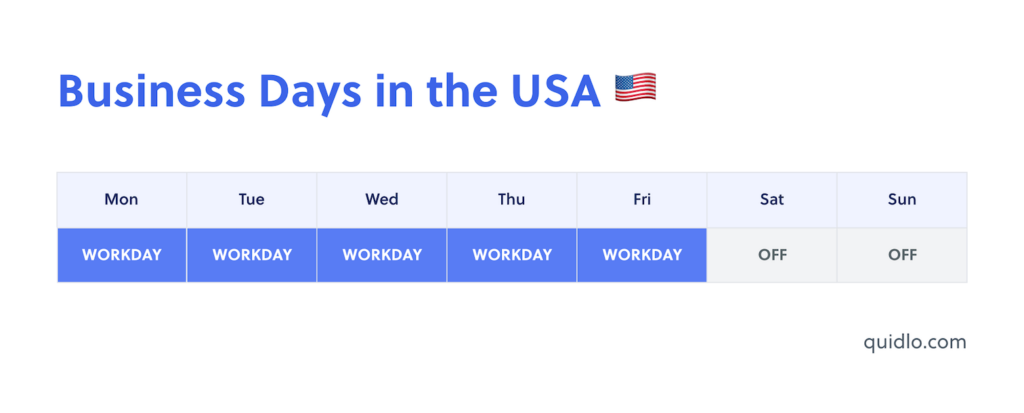

If you have ever tried to set a project deadline, negotiate a contract milestone, or simply figure out how many actual workdays you have left before a big event, you have probably run into this question at least once. It sounds simple on the surface. A year has 365 days. Five of those seven days each week are workdays. So the math should be easy — right?
Not quite. The moment you factor in public holidays, weekends that fall on odd days, leap years, and regional variations, that clean number starts to blur around the edges. The good news is that once you understand the framework, calculating how many working business days in a year becomes completely straightforward — and far more useful for planning than a rough estimate.
Let us walk through everything you need to know.
260
Weekdays in a standard year
~251
Working days after US holidays
261
Weekdays in a leap year
The Simple Starting Point: 260 Weekdays
A standard non-leap year has 365 days. Divide those into weeks and you get 52 complete weeks with one extra day left over. Since each week contains five working days (Monday through Friday), the baseline weekday count is:
The Basic Formula
52 weeks × 5 days = 260 weekdays
The extra one or two days (depending on the year) may add another weekday, bringing some years to 261. In 2025, January 1 falls on a Wednesday, which means the year contains exactly 261 weekdays before subtracting holidays.
This is your raw material — the maximum number of possible working days before you layer in any holidays or organizational policies. For most full-time employees working a standard Monday-to-Friday schedule, every single calculation begins here.
Subtracting Public Holidays: Where It Gets Country-Specific
Here is where things branch. Public holidays are not universal. The United States observes around 10 to 11 federal holidays each year. The United Kingdom has 8 bank holidays in England and Wales (slightly more in Scotland and Northern Ireland). India observes 3 national holidays plus a flexible list of regional ones. Germany varies by state.
This means there is no single global answer to “how many business days in a year” — only a correct answer for your specific country, region, and employer.
United States
The federal government observes 11 official holidays. When a holiday falls on a Saturday, it is observed on the preceding Friday; when it falls on Sunday, the following Monday is the observed day. Most private-sector employers follow the same pattern, though not all are legally required to.
Subtracting those 11 days from 261 weekdays gives you approximately 250 working days in 2025 for a typical US-based employee. Some years the number is 251 or 252, depending on how the weekend calendar aligns.
United Kingdom
England and Wales have 8 bank holidays per year. Scotland has 9. Northern Ireland has 10. Working from a base of 261 weekdays in 2025 and subtracting 8 bank holidays, most employees in England and Wales can expect roughly 253 working days this year.
Australia
Australia has national public holidays but also a generous allocation of state-based ones. Workers in Queensland, Victoria, New South Wales, and other states may find their totals differ by several days. The national baseline sits around 250 to 253 working days, but always check your specific state.
| Country / Region | Base Weekdays (2025) | Typical Public Holidays | Approx. Working Days |
| United States | 261 | 11 | 250 |
| United Kingdom (England) | 261 | 8 | 253 |
| Canada | 261 | 9–13 (varies by province) | 248–252 |
| Australia | 261 | 8–11 (varies by state) | 250–253 |
| Germany | 261 | 9–13 (varies by state) | 248–252 |
| India (national only) | 261 | 3 national + regional | ~250–255 |
| Bangladesh | ~261 | ~22 (incl. Fri–Sat weekend) | ~239 |
The real working year is never 365 days. For most professionals worldwide, it lands somewhere between 240 and 255 days — and knowing exactly where yours falls can reshape how you plan everything from project timelines to vacation schedules.
The Leap Year Twist
Every four years, February gets an extra day — February 29 — adding a 366th day to the calendar. Whether this adds a working day depends entirely on which day of the week that extra day falls. If February 29 is a Saturday or Sunday, it adds nothing to the working day count. If it falls on a weekday, it pushes the total up by one.
In 2024, which was a leap year, February 29 fell on a Thursday. That added one extra working day to the annual total — a small but real addition that anyone tracking billable hours or payroll periods needed to account for.
How Weekend Calendars Vary Across Cultures
The assumption that the weekend falls on Saturday and Sunday is not universal. In several countries, the standard rest days are Friday and Saturday, making Sunday a working day.
Bangladesh, for example, follows a Friday–Saturday weekend in the public sector. This means the working week runs Sunday through Thursday. With roughly 52 Fridays and 52 Saturdays removed, the weekday base is similar — but the holiday calendar looks quite different, including Islamic holidays like Eid ul-Fitr and Eid ul-Adha, which can span multiple days and vary each year based on the lunar calendar. Bangladeshi workers typically see around 239 to 245 working days annually when all public holidays are counted.
In much of the Middle East, the working week also runs Sunday through Thursday. When building a project timeline that crosses international teams, this becomes a significant coordination consideration — one team’s Friday meeting is another team’s first day back.
Why This Number Matters More Than You Think
On the surface, knowing there are roughly 250 working days in a year might feel like a trivia answer. In practice, this number quietly underpins enormous amounts of financial, legal, and logistical decision-making.
Project Planning and Deadlines
When a client contract says “deliverable in 90 business days,” that is approximately 18 calendar weeks — nearly four and a half months. But if those 90 days span the December holiday period, you might effectively have fewer productive days than the number suggests. Professionals who think in business days rather than calendar days tend to build more realistic timelines.
Payroll and Compensation
Companies calculating daily or hourly pay rates often divide an annual salary by the number of working days to determine a “per diem” figure. Using 365 instead of 251 or 252 would mean significantly underpaying — or overcharging — for daily work. Many employment contracts specify this exact number for exactly this reason.
Financial Markets
Stock exchanges, banks, and financial institutions operate on trading days, not calendar days. Settlement periods, contract expiration dates, and regulatory filing deadlines are all measured in business days. The New York Stock Exchange, for instance, is open for trading on approximately 252 days per year — a number financial professionals know well because it forms the denominator for calculating annualized volatility in investment analysis.
Legal and Contractual Obligations
Legal documents frequently specify “business days” for notice periods, response windows, and compliance deadlines. A notice period of “10 business days” is very different from “10 calendar days,” especially when it straddles a holiday weekend. Courts and regulatory bodies apply this distinction strictly.
Calculating Working Days for Any Specific Year
If you need a precise count for a particular year, here is the step-by-step method that never fails:
Step-by-Step Method
- Step 1: Count the total number of days in the year (365 or 366 for leap years).
- Step 2: Count all Saturdays and Sundays (or whichever days are your regional weekend).
- Step 3: Subtract weekends from the total. This gives you your base weekday count.
- Step 4: List all public holidays observed in your country and region for that year.
- Step 5: Remove any holidays that fall on a weekend (they are already excluded).
- Step 6: Subtract the remaining holidays from your base weekday count.
The result is your actual working business day count for that year.
Spreadsheet users can automate this entirely with NETWORKDAYS functions in Excel or Google Sheets. Simply input a start date of January 1 and an end date of December 31, then provide a list of your region’s public holidays, and the formula handles the rest.
Company-Specific Variations
Even within the same country, two employees at different companies can have different numbers of working days. Here is why:
Additional company holidays. Many employers — particularly in the tech and professional services sectors — offer “floating holidays” or “company closure days” beyond the statutory minimums. A company that closes the week between Christmas and New Year’s Day effectively removes up to five additional working days from their employees’ year, bringing the total down to around 245 or fewer.
Four-day workweek policies. A growing number of organizations have adopted a four-day working week — typically Monday through Thursday. For these employees, the base calculation uses four days per week rather than five, resulting in approximately 208 working days before holidays.
Compressed schedules. Some employees work 9-day fortnights, with alternating Mondays off. Their actual working day count sits somewhere between a four-day and five-day work week annual total.
A Note on “Business Days” in Common Communication
When a company’s customer service team tells you “allow 3 to 5 business days for processing,” they typically mean Monday through Friday, excluding any public holidays. If you submit a request on Friday afternoon, day one of processing is usually the following Monday. If that Monday happens to be a public holiday, day one shifts to Tuesday. Small distinction — but if you are waiting on a refund, a visa decision, or a signed contract, it matters.
This is also why e-commerce shipping estimates sometimes feel conservative. Carriers and logistics providers use business day calculations that exclude weekends and their own observed holidays, which can vary from federal holidays.
The Bottom Line
There is no single universal answer to how many working business days exist in a year, but there is a reliable framework for finding your specific number. For most full-time professionals on a Monday-to-Friday schedule in the United States, the realistic answer for 2025 is around 250 working days. In the UK, it is closer to 253. In Bangladesh, with a Friday-Saturday weekend and a different holiday calendar, it sits nearer to 239 to 245.
What makes this number genuinely valuable is not the figure itself — it is what you do with it. Whether you are drafting a project timeline, negotiating a service agreement, calculating a daily rate, or simply trying to understand how much runway you have before the year ends, thinking in business days gives you a more grounded, realistic picture than thinking in calendar days ever will.
Frequently Asked Questions (FAQs)
How many working days are in 2025 specifically?
For US employees, 2025 has 261 weekdays and 11 federal holidays, giving approximately 250 working business days. The exact count can vary slightly depending on your state and employer’s holiday policy.
Is there a difference between “business days” and “working days”?
In most contexts, the terms are interchangeable. Both refer to Monday through Friday, excluding public holidays. Some industries use “business days” specifically in a legal or financial context, while “working days” is more common in HR and project management settings.
How many working hours are in a year?
For a standard full-time employee working 8 hours per day: 250 working days × 8 hours = 2,000 working hours per year. This is the figure commonly used in US employment law and compensation calculations.
Does the count change every year?
Yes, slightly. The number of weekdays in a year ranges from 260 to 262 depending on how January 1 falls in the weekly cycle and whether it is a leap year. After removing holidays, the practical working day count typically varies by one or two days from year to year.
What about part-time workers?
Part-time employees prorate the full-time count based on their scheduled days. Someone working three days per week has a base of approximately 156 working days before holidays — and their holiday entitlement is usually calculated proportionally as well.