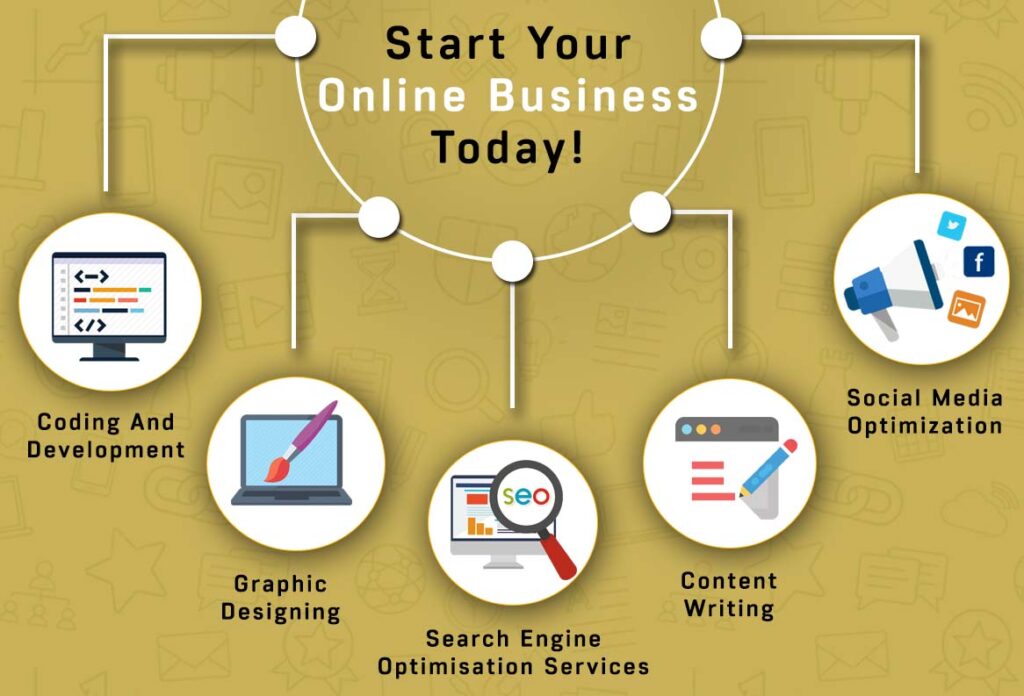

Starting an online business is one of the most accessible things you can do today — and one of the most misunderstood. The internet is full of people selling the dream. This guide is here to help you build it.
How to start an online business can feel overwhelming at first—I remember wondering where to begin and fearing mistakes. But once you break it down, it becomes exciting and achievable. From choosing a niche you truly care about to building your first website and finding customers, every step teaches something valuable. In this guide, I’ll walk you through simple, practical steps to help you confidently launch your own online business and start growing.
Why Most People Never Actually Start
Here’s an uncomfortable truth: the biggest barrier to starting an online business isn’t money, timing, or even a good idea. It’s the paralysis that comes from overthinking all three at once.
People spend months building the “perfect” website before they’ve had a single real conversation with a potential customer. They buy domains, design logos, and debate color palettes — all while avoiding the one thing that matters: talking to real people who might pay them money.
This guide is going to push you in a different direction. We’re starting with people, not products. With conversations, not color schemes.
Finding the Right Business Idea for You
The best online business ideas sit at the intersection of three things: what you know, what people need, and what someone will pay for. Notice that “what you’re passionate about” isn’t automatically on that list — passion is a bonus, not a prerequisite.
Factor 01
Your skills & knowledge
What do people ask you for help with? What have you figured out that most people haven’t?
Factor 02
A real problem
Something frustrating, expensive, time-consuming, or embarrassing that a specific group of people deals with.
Factor 03
Willingness to pay
People already spending money to solve this problem in some form — even imperfectly.
Factor 04
Market access
You can actually reach the people who have this problem — online communities, search, social, email.
Some of the most successful online businesses are boring from the outside. Someone teaching freelance accountants to get better clients. Someone running a newsletter for independent veterinarians. And someone is selling Notion templates to HR managers. Boring to most people, invaluable to the right ones.
Write down five problems you’ve personally solved, or five groups of people you genuinely understand. That’s your starting point — not a viral idea or a trending product category.
Validating Before You Build
Validation is the step everyone skips and everyone regrets skipping. It sounds like a startup buzzword, but it’s actually just this: make sure someone wants what you’re planning to sell before you invest weeks or months creating it.
A business idea isn’t an asset — it’s a hypothesis. Your job is to test it cheaply and quickly before betting big on it.
Here’s a simple validation process you can do in two weeks:
1
Talk to 10 people who fit your target customer description. Not to pitch them — to understand their problems. Listen more than you talk.
2
Create a simple offer — a one-paragraph description of what you’d sell and what it would cost. Share it with five of those people and ask if they’d buy it.
3
Ask for a commitment — not just “would you buy this?” but “can I take your payment now and deliver this in two weeks?” Real money signals real interest.
4
Deliver something small — even manually at first. You’ll learn more from delivering once than from planning for months.
If you can’t get a single person to pay you something — even a small amount — for your offer, that’s valuable data. Don’t interpret it as failure; interpret it as redirection.
Setting Up Your Foundation
Once you’ve validated the idea, it’s time to build the infrastructure. The good news: in 2026, this is genuinely simple and inexpensive.
The legal side
Register your business. In most countries, a sole proprietorship or single-member LLC is the right starting point — it protects your personal assets and makes you look legitimate to customers. Open a separate business bank account immediately. Mixing personal and business money is a headache you don’t need.
The technical side
You need four things and four things only to start: a way to collect payment, a way to communicate with customers, a way to deliver your product or service, and a basic online presence so people can find and trust you.
Payment: Stripe, PayPal, or Gumroad — pick one and move on.
Communication: An email address at your domain. Use Google Workspace or similar.
Delivery: Depends on your business — Zoom for services, a simple file host for digital products, a Shopify store for physical goods.
Online presence: A one-page website with your offer, who it’s for, and how to contact you. That’s it for now.
Resist the temptation to over-engineer this stage. Many six-figure online businesses started with nothing more than a Canva-designed one-pager and a Stripe payment link. Sophistication comes later, after you’ve proven the business works.
Getting Your First Paying Customers
This is the chapter most guides get wrong. They tell you to “build an audience” and “create content” — advice that’s true but takes months to pay off. Before you think about content strategy or SEO, focus on direct outreach.
Your first ten customers will almost certainly come from people who already know you, or people connected one step away. Send a personal message — not a blast, a real personal message — to people in your network who fit your customer profile. Tell them what you’re doing. Ask if they know anyone who might benefit.
This feels awkward. Do it anyway. The discomfort is temporary; the knowledge you gain from those early conversations is permanent.
Then build a repeatable acquisition channel
Once you have a handful of paying customers and you understand their language — how they describe their problem, what matters to them — you can start building a more scalable way to reach new people. The right channel depends on your business:
Channel A
Search (SEO & content)
Best for: products people actively search for solutions to. Slower but highly durable.
Channel B
Social media
Best for: businesses with a visible personality or process. Works well for services and personal brands.
Channel C
Email & newsletter
Best for: building long-term trust with a niche audience. High return on investment over time.
Channel D
Partnerships
Best for: reaching an existing audience quickly. Find complementary businesses that serve your customers.
Pick one channel and go deep, rather than dabbling in all four. Mastery beats breadth at the early stage.
Growing Without Burning Out
Here’s something the online business world rarely talks about honestly: the first year is genuinely hard. Not because the work is impossible — it usually isn’t — but because the feedback loops are slow, the uncertainty is constant, and you’re often building alone.
The entrepreneurs who succeed long-term tend to share a few habits that have nothing to do with strategy:
→
They track leading indicators — actions they can control — not just revenue numbers they can’t.
→
They set a working cadence and protect it. An online business has no natural off switch, so you have to create one.
→
They find at least one other person on a similar path — a community, a forum, a local group — to sanity-check ideas and share frustrations.
→
They give themselves a specific timeline before making major pivots. Quitting too early is just as common a mistake as persisting too long.
Sustainable growth is boring growth. Small, consistent actions compound over time in ways that sporadic bursts of intensity never do.
Don’t miss: Health and Safety Jobs: A Rewarding Career Path Protecting People, Workplaces, and the Future
Common Mistakes (and How to Dodge Them)
In no particular order, here’s what trips up most first-time online business owners:
Building before validating. You’ve already read this, but it bears repeating. Spend time with customers before you spend time building a product.
Pricing is too low. The instinct to be “affordable” while you’re starting often backfires. Low prices attract the wrong customers, make the economics unworkable, and signal low quality even when quality is high. Price for the value you deliver, not your confidence level.
Trying to serve everyone. The more specific your target customer, the clearer your message, and the easier your marketing. “I help small e-commerce stores reduce returns” is stronger than “I help businesses grow.”
Chasing shiny objects. Every week there’s a new platform, a new format, a new strategy someone swears is the one. Most of them won’t matter for your specific business. Ignore them until you’ve mastered the fundamentals.
Not building an email list. Social platforms come and go. Algorithms change. Email is the one channel you own. Start collecting addresses from day one, even if you don’t send anything for a while.
Frequently Asked Questions (FAQs)
How much money do I need to start an online business?
Less than you think. A domain name, basic hosting, and a payment processor can run under $30/month total. Service businesses can start for almost nothing. The real investment is time, not capital.
Do I need a business plan?
Not a formal one, no. You need clarity on who you’re serving, what problem you’re solving, and how you’ll charge for it. A one-page document covering those three things is more useful than a 30-page plan nobody reads.
How long before I can quit my day job?
This varies enormously, but a realistic range for a service business hitting basic financial sustainability is 6–18 months of consistent work. Productized businesses and digital products often take longer to build but scale faster afterward.
What’s the best type of online business to start?
The one you’ll actually follow through on. That said, service businesses (freelancing, consulting, coaching) have the fastest path to revenue. Digital products and SaaS take longer to build but have better long-term leverage.
Do I need social media?
Not necessarily. Plenty of online businesses grow entirely through SEO, email, or word of mouth. Social media can accelerate growth, but it’s a tool — and like all tools, it’s only useful if it fits your specific situation.



Pingback: Certified Business Enterprise: The Complete Guide to CBE Certification - Topbusinessweb