

Three letters appear on your paycheck, in your broker’s dashboard, and in every quarterly earnings report: YTD. Year to date. It sounds deceptively simple — and it is — but the way it’s used quietly shapes decisions worth billions of dollars every year.
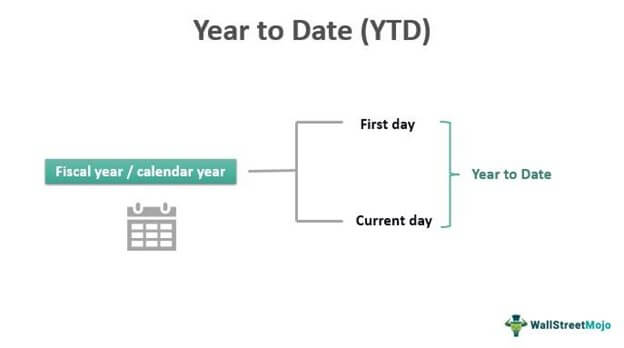
At its core, YTD means the period from the first day of the current year up to today (or some specified date within that same year). Whether you’re a salaried employee checking how much you’ve earned so far, a fund manager comparing portfolio returns, or a CFO tracking whether revenue is on pace, YTD is the measurement that ties a snapshot in time back to where things started.
Calendar year vs. fiscal year: the start date matters
For most individuals, “the year” begins on January 1. That’s the calendar year, and it’s the default assumption when YTD appears without further context.
But companies don’t have to follow the calendar. A fiscal year is any 12-month accounting period a business chooses — and it might start in April, July, or October. Retailers famously end their fiscal years on January 31, after the holiday rush, which means their fiscal year begins February 1.
Calendar YTD
Jan 1 →
Today (or any date in the same calendar year). The default when nothing else is specified.
Fiscal YTD
FY Start →
From a company’s fiscal year start date up to the date given. Could be any month.
Quick rule: If a financial statement says “YTD” with no other qualifier, assume it runs from January 1. If the issuer follows a non-calendar fiscal year, verify the actual start date before drawing conclusions.
Three places you’ll encounter YTD
| Context | What YTD tracks | Why it matters |
| InvestingPortfolio | Return on holdings from Jan 1 to now | Benchmarks performance against indices like the S&P 500 without waiting for year-end |
| BusinessFinancials | Revenue, expenses, profit vs. budget | Flags overspending or under-performance early enough to course-correct |
| PersonalPay stub | Gross and net earnings, tax withheld | Helps with budgeting and confirms withholding ahead of tax season |
How to calculate YTD
Basic formula
To find the percentage change from the start of the year to any later point, four steps are all you need:
- Record the value on the first day of the year (opening value).
- Record the value at the chosen end date (current value).
- Subtract the opening value from the current value, then divide by the opening value.
- Multiply by 100 to express as a percentage.
Annualised YTD
A raw YTD figure of +4% in June isn’t directly comparable to a full-year return of +8%. To put them on equal footing, annualise the YTD figure: divide current value by opening value, raise to the power of (12 ÷ months elapsed), then subtract 1 and multiply by 100.
Interactive calculator
Try it yourself. Adjust the values below to see your YTD return — and its annualised equivalent.
Start value ($)$9,000
Current value ($)$9,500
Months elapsed9 mo
YTD return
5.56%
Annualised
7.48%
YTD vs. MTD: a quick distinction
Month-to-date (MTD) works on the same logic but resets at the start of each calendar month rather than the start of the year. If today is May 20, your MTD sales figure covers May 1–19, while YTD covers January 1–May 19. MTD is useful for spotting short-term blips; YTD shows the bigger arc of the year.
Both MTD and YTD are trailing figures — they describe what has happened, not what will happen. Use them alongside forecasts and benchmarks to get the full picture.
Don’t Miss: Pec Stretch: Why Your Chest is Tighter Than You Think
Why it’s more useful than you might think
An annual report tells you where you ended up. A daily or weekly number is too volatile to act on. YTD occupies the sweet spot: long enough to filter out noise, short enough to still influence the outcome. That’s what makes it the default lens for managers, investors, and payroll departments alike.
Check your YTD figures periodically, compare them to benchmarks and prior years, and you’ll catch problems — or opportunities — while there’s still time in the year to respond.

C168 Rút Tiền Siêu Tốc: Trải Nghiệm Giao Dịch Tài Chính Minh Bạch và Nhanh Chóng
F8bet nơi quy tụ những game show nổi bật nhất năm 2026
F8bet nơi quy tụ những game show nổi bật nhất năm 2026
Mình thấy F8BET có giao diện thân thiện với thiết bị di động, truy cập và sử dụng khá mượt.
Điểm nổi bật của C168 nằm ở kho trò chơi phong phú, từ cá cược thể thao, casino trực tuyến đến các tựa game đổi thưởng hấp dẫn. Bên cạnh đó, hệ thống giao dịch nạp rút nhanh chóng cùng dịch vụ hỗ trợ khách hàng 24/7 giúp người chơi an tâm trong suốt quá trình trải nghiệm.
F8bet nơi quy tụ những game show nổi bật nhất năm 2026
C168: Sân Chơi Cá Cược Thể Thao Đỉnh Cao Dành Cho Người Việt
F8bet nơi quy tụ những game show nổi bật nhất năm 2026
F8BET nơi quy tụ những game show nổi bật nhất năm 2026
78win nơi quy tụ những game show nổi bật nhất năm 2026
Nền tảng cung cấp nhiều sản phẩm hấp dẫn như cá cược thể thao, casino trực tuyến, game slot và các trò chơi đổi thưởng phổ biến.
F8BET nơi quy tụ những game show nổi bật nhất năm 2026
Nếu đang tìm một nền tảng có giao diện hiện đại và dễ sử dụng thì F8BET là cái tên đáng để tham khảo.
Điều mình ấn tượng ở F8BET là giao diện hiện đại và thân thiện với người dùng. Người mới cũng có thể dễ dàng làm quen chỉ sau vài phút sử dụng.
Vừa hoàn tất đăng ký tại C168 là mình nhận ngay được code 68K khởi nghiệp, hỗ trợ khách hàng ở đây trực 24/7 nên giải đáp thắc mắc rất nhanh. Giao diện trang chủ mượt mà, dễ thao tác, cực kỳ phù hợp cho những anh em mới bắt đầu tìm kiếm cơ hội bứt phá thu nhập.